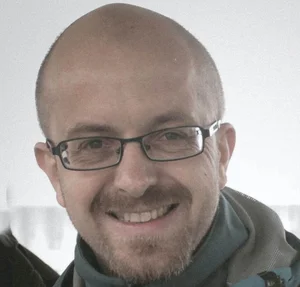
The Protagonist in the Mirror: journey of a self-made filmmaker.
We are all the main protagonists of the story of our lives. Joseph Campbell’s Hero’s Journey—that key matrix for so many films—surely has roots deeply anchored in the fabric of reality. The hero, following a precipitating incident, heeds the call to action to embark on a quest full of ups and downs. He faces the antagonist and obstacles, often helped by an adjacent character, and finds resolution at the end of the film. If my own journey is anything like the hero’s, it may be time, after over 20 years of a breathless quest, to pause. It is time to take stock of the series of events and reflect on life through the lens of film. After all, I have now achieved a respectable number of the key goals I had set for myself.
Act I: The Call to Adventure
It all started when I came to the realization that I could not progress any longer on the path I was walking. Many of the strategic decisions I had taken so far had been prompted by external factors, not the proactive results of a thoughtful, deliberate process. I had gone with the flow of events, saying "Yes" to invitations and opportunities. There I was: a permanent resident of Hong Kong, an expert in international commerce and export, managing a buying office. I had covered my bases, yet what made the job valuable to me no longer worked.
The "Call" did not come as a whisper, but as a scream. I was walking the crowded streets of Causeway Bay when I suddenly felt a crushing pressure in my chest. The sky was suddenly blown out in a blinding light. This was not a heart attack, but a panic one—my body signaling in the loudest voice possible that something needed to be done, that a change needed to occur.
I was at a turning point.
A deep, personal introspection led to an idea that had been in front of my eyes all along: “I want to make movies.” You see, cinema had always been an essential part of my life. The theater had been my refuge from an early age, and the rise of video club culture had transformed the way we watched movies. Suddenly, with multiplexes all around town and the possibility to rent six video cassettes at a time, I could embrace movies like never before. Binging was not invented by Netflix. That curiosity engine was always there; the more I watched, the more I wanted to understand how films are made, how emotions are crafted, how to achieve catharsis.
In the words of director Gaspar Noé, whom I got to film and interview some time later: “A film is a roller coaster. You must make them (the audience) excited, happy, afraid, sexually aroused... a film... is a spectacle.” Gaspar's words resonated deeply when I directed a scene for my short film Speedsters. Filming my character "Chase," a rollerblading heroine gliding on a highway, I evoked this idea that is so dear to me: "Flow."
Act II: Crossing the Threshold
Thinking IKIGAI, I wondered: “What skills do I possess that could create value and lead me to that new, proactive, and intentional goal?”
Having shipped products in the hundreds of thousands, resolved complex manufacturing problems, and solved numerous logistical issues, it was clear I could get things done. But entering the film industry in the Cantonese language was no small feat for a Frenchman. I knocked at numerous doors: equipment houses, entering their fascinating Ali Baba caves for the filmmaker; I reached out to production houses, asked questions upon questions. I was rejected, many times, even laughed at. I was told, "You will never understand us; in OUR industry."
Perseverance was forged in fire.
Building a portfolio from scratch was no easy task. A foundational moment was the day I was rehired on the set of Largo Winch by multi-award-winning production designer Michel Barthélémy. I had been assisting on the construction of a massive set on the rooftop of the Grand Hyatt, but I had been let go by a production manager who, for obscure reasons, found that my mastery of Cantonese might be a threat to his personal and financial interests. My direct boss, Michel, begged to differ, as I’d been a key liaison with the local crew of set builders.
It became clear: there was a need for a reliable, trustworthy contact who would put the interests of the projects at the forefront. An expat speaking Chinese, perhaps, could offer a bit more commonality and trust.
Inspired by the film The Killing Fields and the courage of Dith Pran—the translator who helped reveal the Cambodian story to the world—I realized I could wrap everything together. Instead of being a comprador developing products, I could be the local intelligence helping stories come alive.
It all made sense now. In that transition, I had taken up a part-time gig as a tourist guide, which I quickly turned into a VIP experience I called “The Enlightened Walks.” The Hong Kong Fixer was born, based on these values: creatively curious efficiency and a personal film, TV, and media school. I had found the way to learn the business and techniques of show business—and to step towards my ever more solid ambition of being a director.
Act III: The Ordeal and the Reward
The early days were challenging. A first request from a Singapore production company asked for, amongst other technical elements, “a First AC.” Without a mastery of the lingo, I was at a loss. I remember vividly the scramble to find out what the F@###$ all this meant—no AI at this time! So I walked the streets, engaged with as many people as possible, checked the early web, and figured it out: a First AC is the pro in charge of the camera, the focus puller with the sharpest eye on set. I figured it out because I had to. I wanted to.
This was the beginning of an ever-expanding body of knowledge and experience, a cycle of non-linear growth manifested by bursts of learning through boundary-stretching challenges. Picking up what had been let down by the appointed fixer on the Google Science Fair film production—in 24 hours—was definitely one of these “big challenge, large reward” projects.
Over the years, the scope and complexity of projects grew, and the confidence within grew too. Today, The Hong Kong Fixer is an established brand providing highly tailored film and video production services in Hong Kong and China. Stories, locations, crew, equipment, logistics, production management—we put it all together. Artists, directors, brands, and world-famous media networks have all trusted the services provided by a boutique company which places “Care” at the heart of everything. My personal work has evolved here too; recently, a film I directed won two awards at the Cannes Corporate Media & TV Awards.
The Return
Over the years I have worked with a lot of professionals and young, up-and-coming talents as well. I found that mentoring was an unexpectedly rewarding task, and I have been asking myself: perhaps I could now share knowledge hard-earned on set with the next generation?
And of course, I have also embarked on a quest to find the new project. This has taken me on a photographic journey to the West of China—this country that I know so well and so little. On long train journeys and deep desert meditations, I am applying the visualization techniques I have come to love using both in direction and production.
What project will ignite the fire next? It seems that there is no escaping AI in the filmmaking process these days, and while it certainly is a double-edged sword, what really interests me is how it could be used to tell real human stories that foster emotion. Perhaps Darren Aronofsky and the projects he harbors at "Primal Soup" with Google DeepMind offer some elements of a solution. I was quite inspired by their first production, Ancestra a film by Eliza McNitt.
The experience of the cinema is more than ever my refuge. The future is an open script—one where I hope, with a little help from the Ghost in the Shell, we will continue to tell truly human stories.